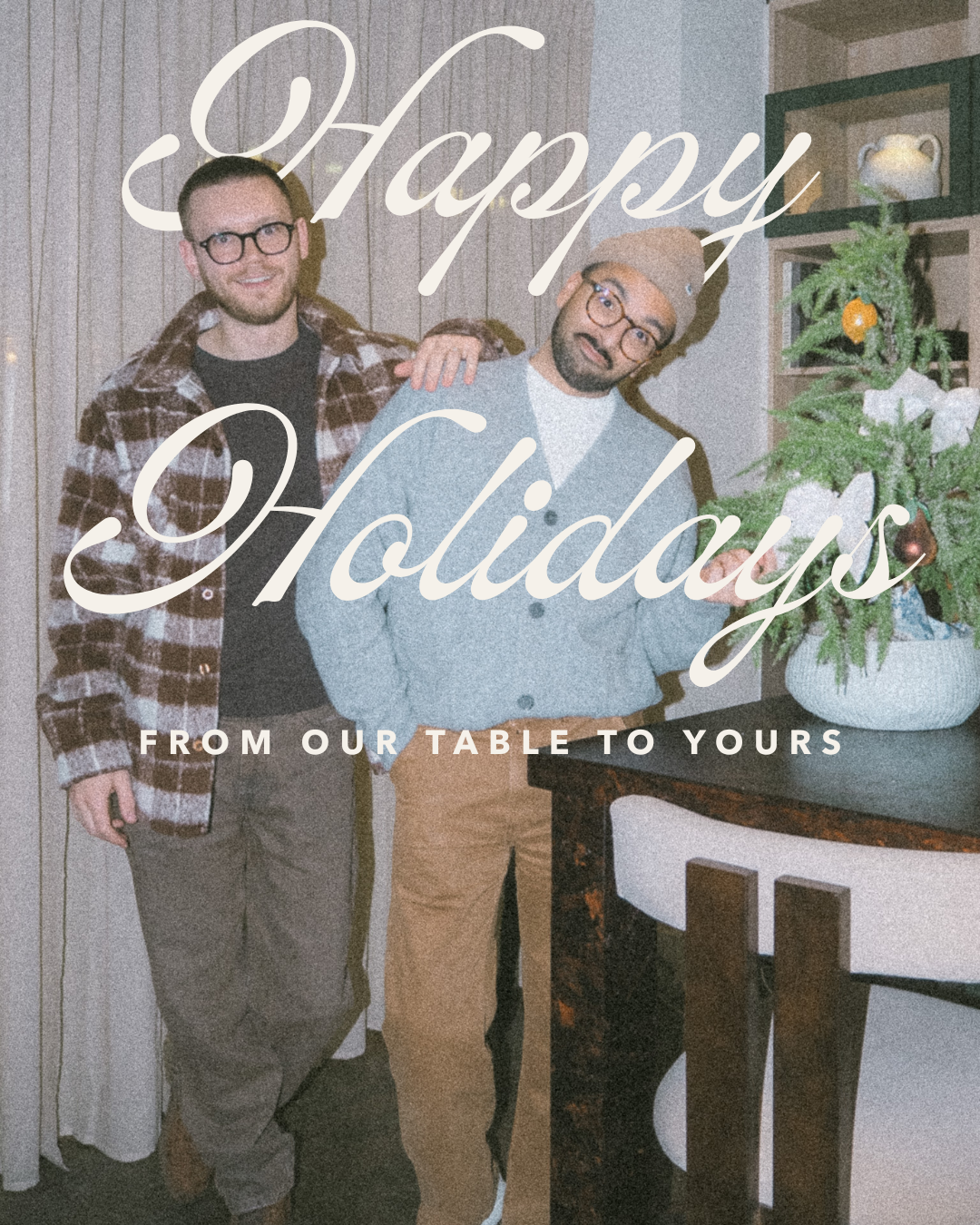
The Holiday Playbook
The Art of Hosting, Decorating,
and Not Overcomplicating the holidays
A Q&A with Ijmal Haider and Joel Matthew Warkentin of Haider Design Group
Q. This year felt different for you both. What intention did you set going into the holiday season?
I: The holidays are always very go‑go‑go for us between work and events, which is usually how we end up feeling fatigued or burned out. I’m generally go-with-the-flow and open to spontaneity, but the holidays can take me down if we’re not prepared. This year, we both leaned into wanting to bring the magic back. That sense of whimsy and wonder that often gets lost as we get older. Our decor became a direct reflection of that mindset. We intentionally looked back to moments from childhood, when the smallest details felt transportive and the season felt simple and exciting.
J: Easier said than done, of course, but we went into the season knowing we had absolutely no control over most things. We leaned into the chaos. As it turns out, that was exactly what we needed. From hosting to decorating, that decision opened the door to noticing small moments, embracing imperfection, and actually being present. It felt nostalgic in the best way.
Q. How do you decide what kind of feeling you want your home to carry during the holidays?
I: This is where the psychology of design really comes into play for me. We follow our instincts and think about what the season will realistically bring: hosting, travel, quiet moments, or all of the above. We usually start with the tree and the colour palette, then build a design direction that aligns with the energy of the season ahead. It’s very similar to how we approach projects. We’ll both leave an initial meeting with ideas, sometimes overlapping, sometimes coming from different angles, but they always blend. I design from a very instinctual place. I can visualize the end result clearly, and Joel’s perspective tends to layer in seamlessly.
J: What he said.
The Halls? Decked
Q. Why does home matter so much to you during the holidays specifically?
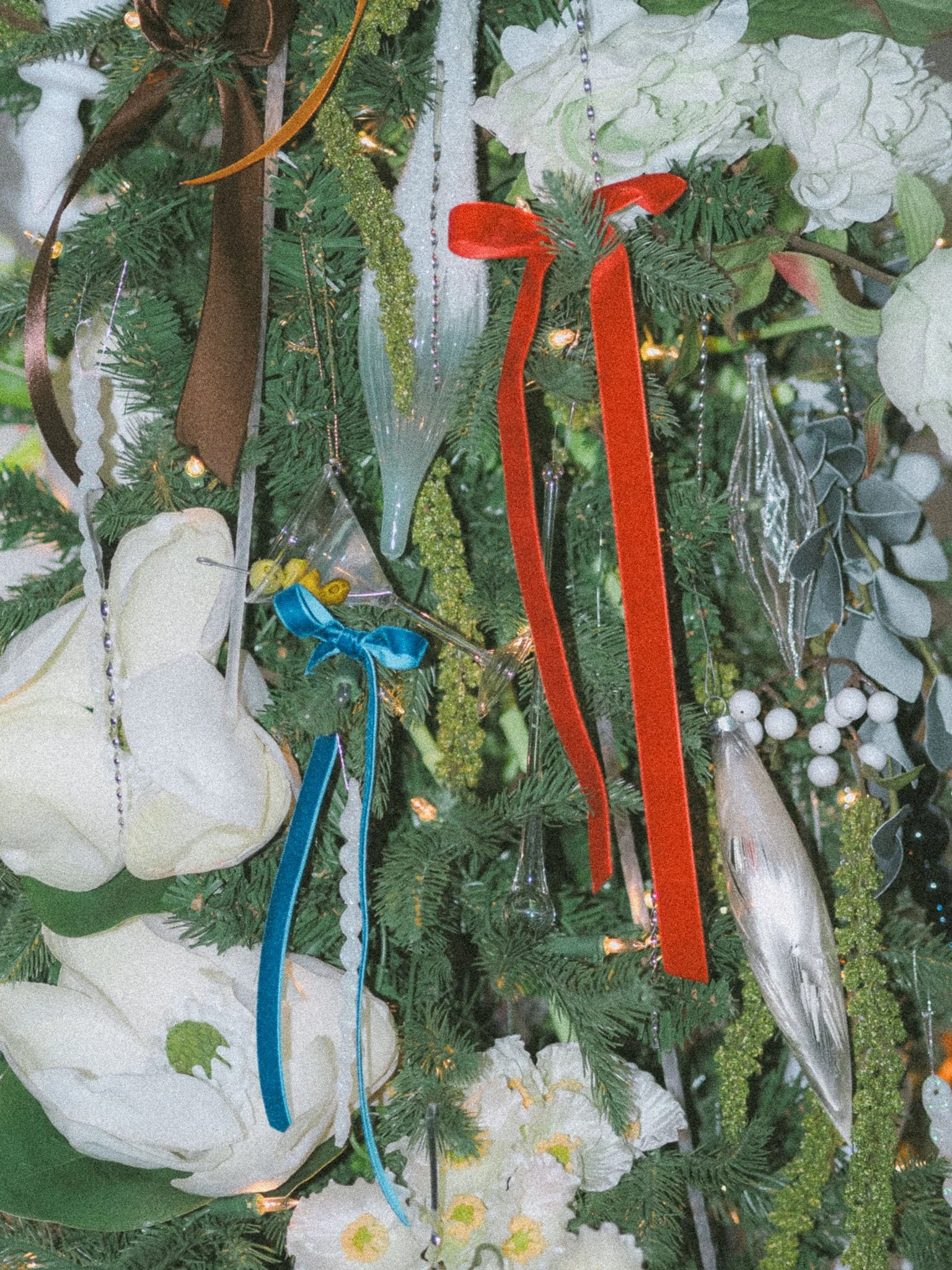
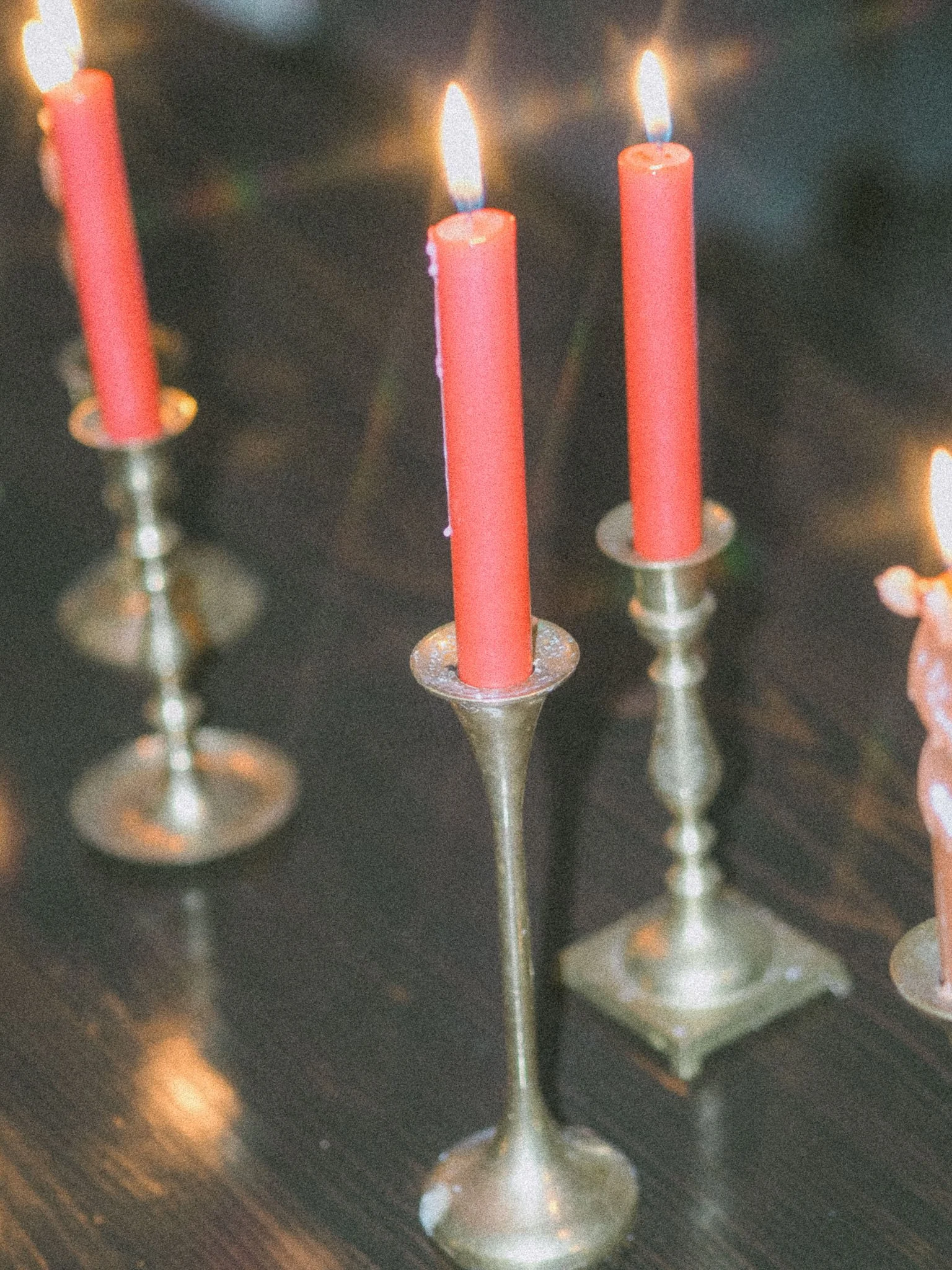
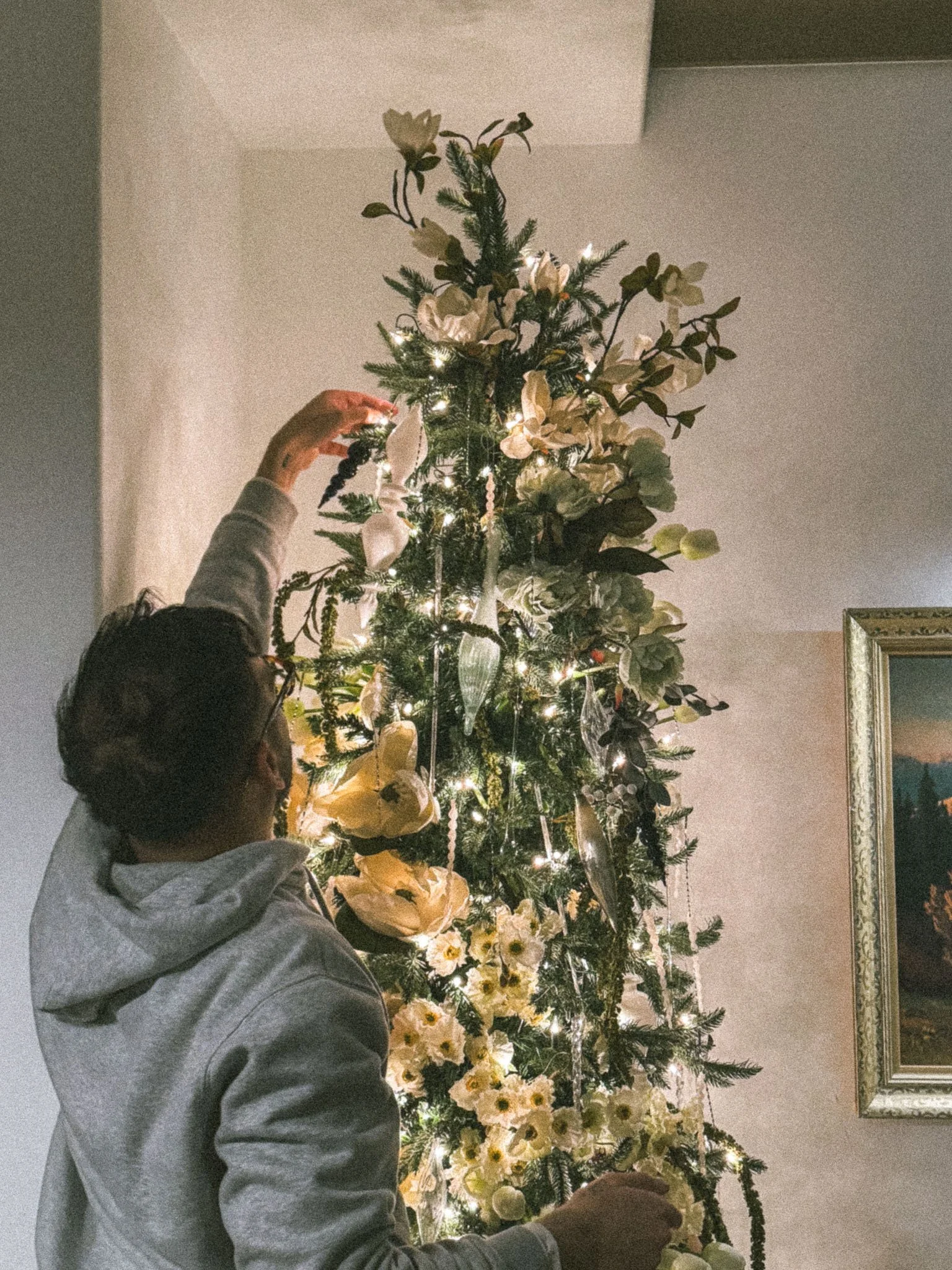
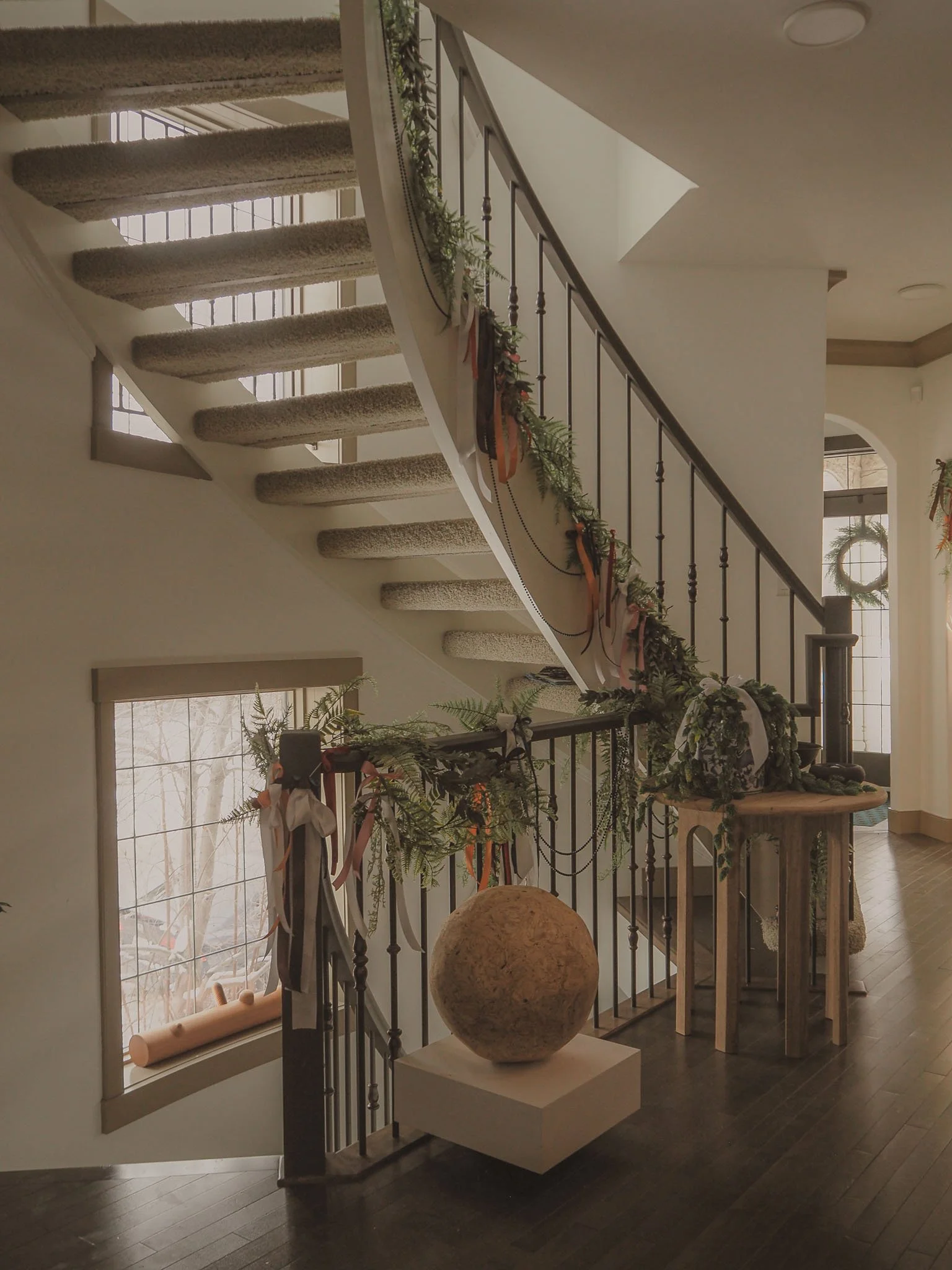
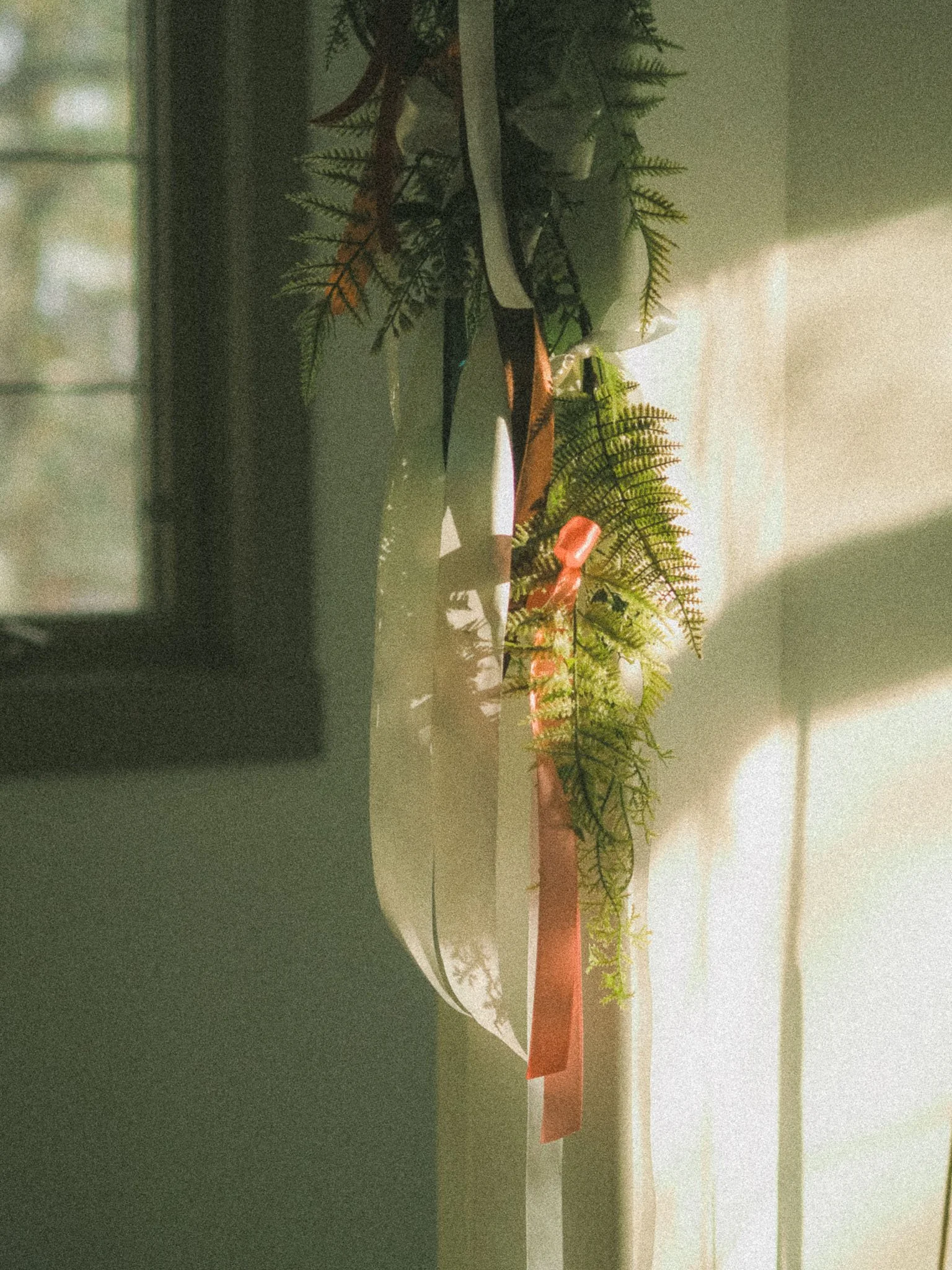
I: Home matters all year, but the holidays are when we really pause and give it extra care. The changes we make often reflect what kind of year we’ve had and what influenced us most. This year, we leaned into a nostalgic palette and design language. It felt very 1990s in spirit, with satin and velvet bows, garlands draped down the banister, and florals that moved fluidly through our tree. Those details made the house feel cozy and familiar, which is especially important when hosting new people. Familiarity creates calm.
Q. You bring out everything when you decorate. Why is that part of the ritual for you?
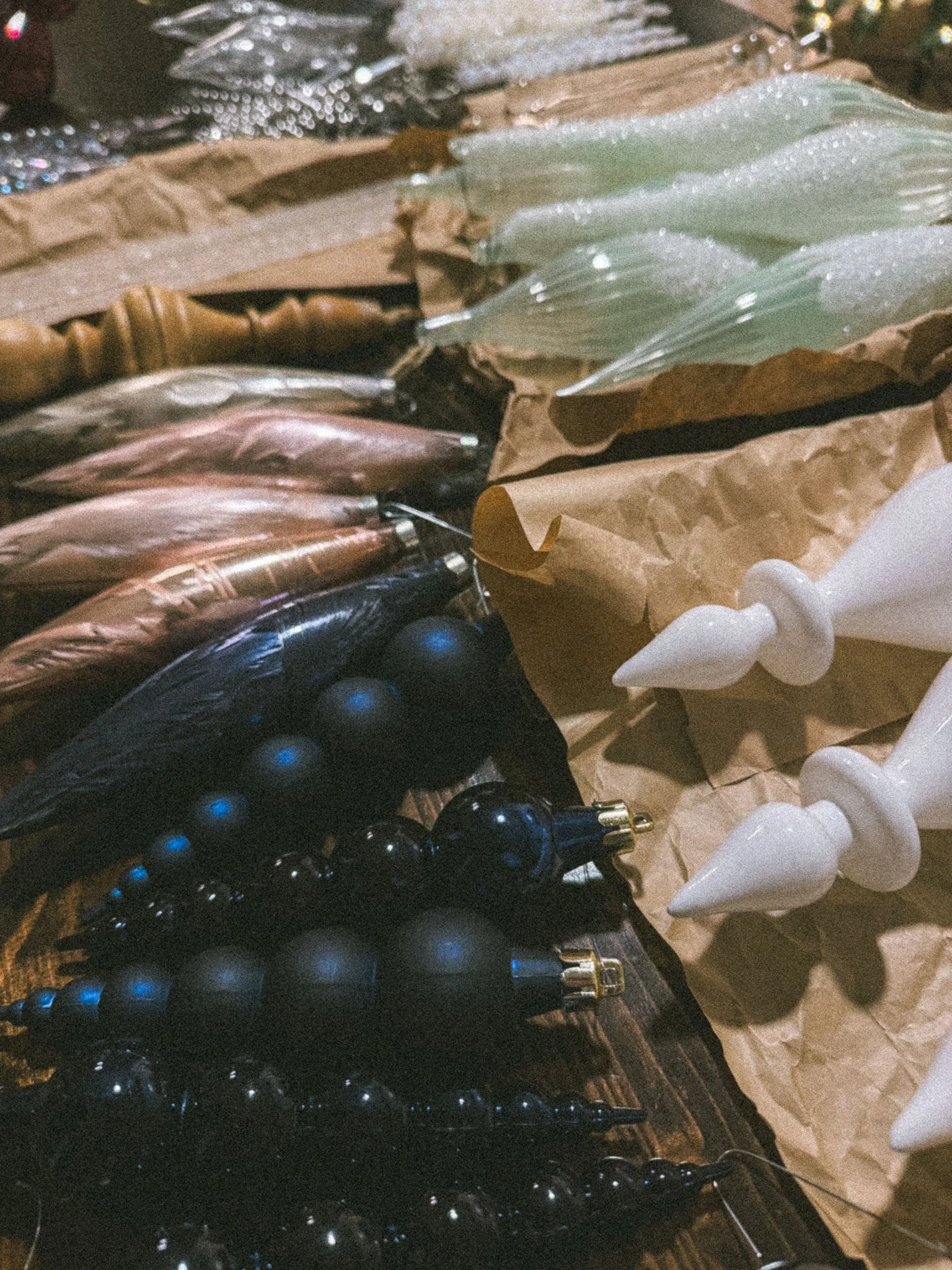
I: This question excites me because the packrat in me knows how cyclical design and fashion really are. The same goes for holiday decor. Pieces we loved once often come back into orbit. Collecting and keeping key items adds personality and story. Style is an evolution. You can either let your past haunt you, or let it reprise itself with charm. For us, every ornament has a memory attached. Each one sparks conversation and reminds us of where we’ve been.
J: Going through everything each year is genuinely fun. It sets the tone. Growing up, we pulled out every ornament one by one and talked about when we got it, who gave it to us, and occasionally laughed at truly questionable childhood crafts. That tradition stuck. Sometimes you need an extra push to feel festive, which I need from time to time. Ijmal will happily tell you about the one year I tried to cancel Christmas (it didn’t take, and I’m very grateful for it).
Q. How do you approach curating holiday decor instead of just decorating?
J: If you don’t love it, don’t buy it. If it doesn’t make you smile or spark joy, it’s not for you. Decorating should be fun. If it isn’t, you’re thinking too hard. Don’t buy ornaments just because they match a colour palette. Buy them because when you pull them out next year, you’ll remember exactly when and why you added them. Curating holiday decor is less about the object and more about the memory.
Q. Which vintage pieces always make it into your holiday styling, no matter the year?
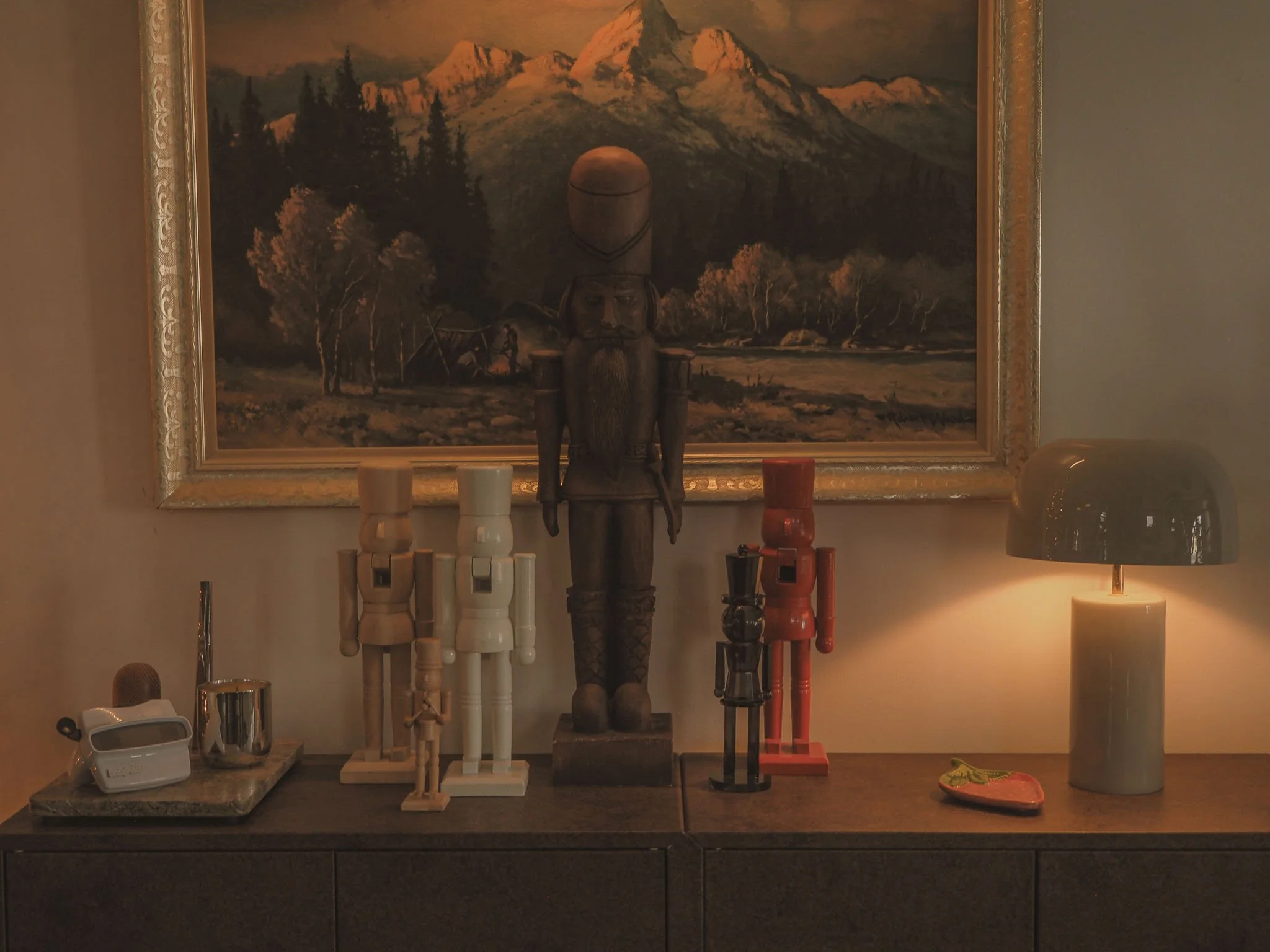
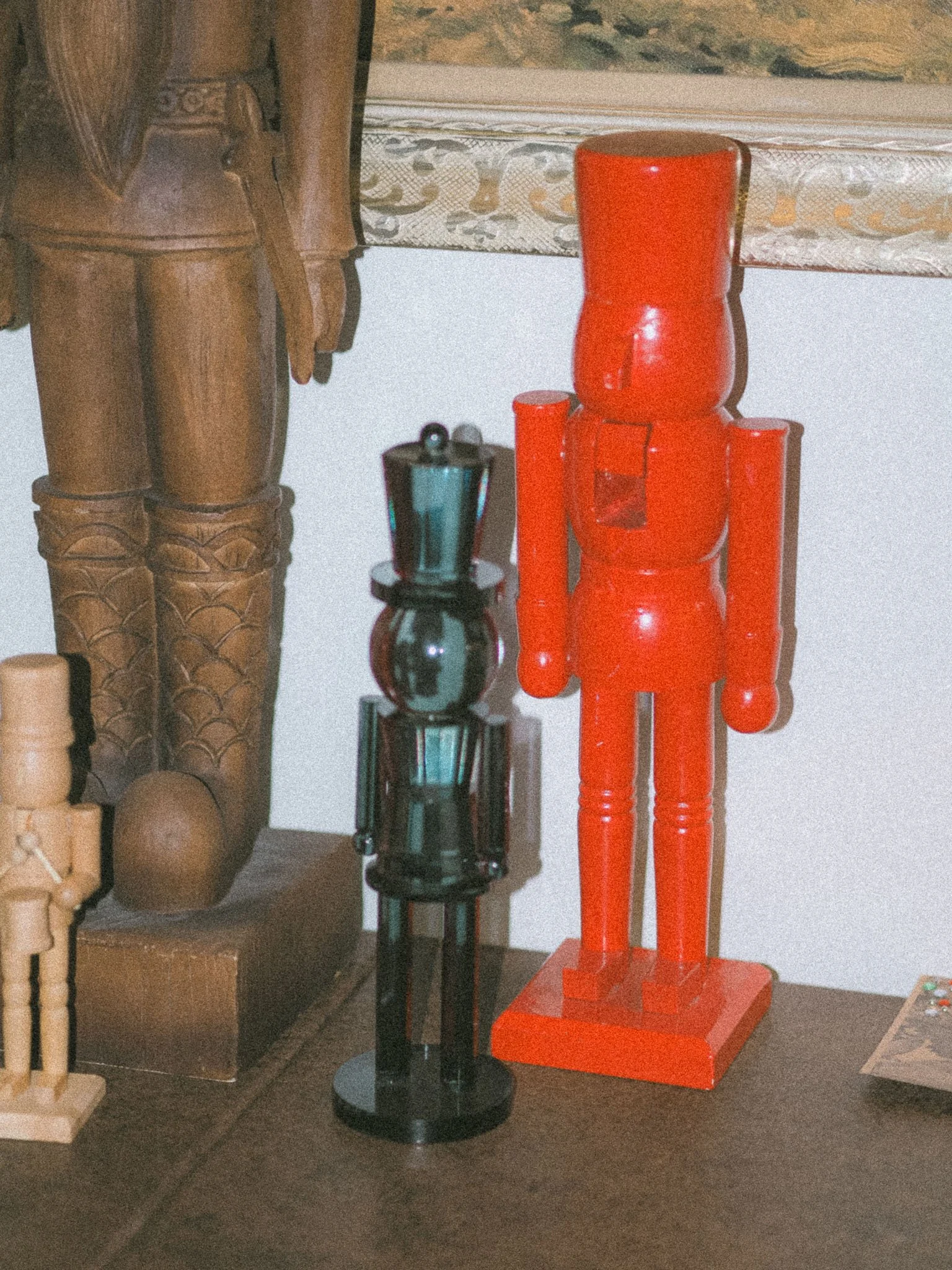
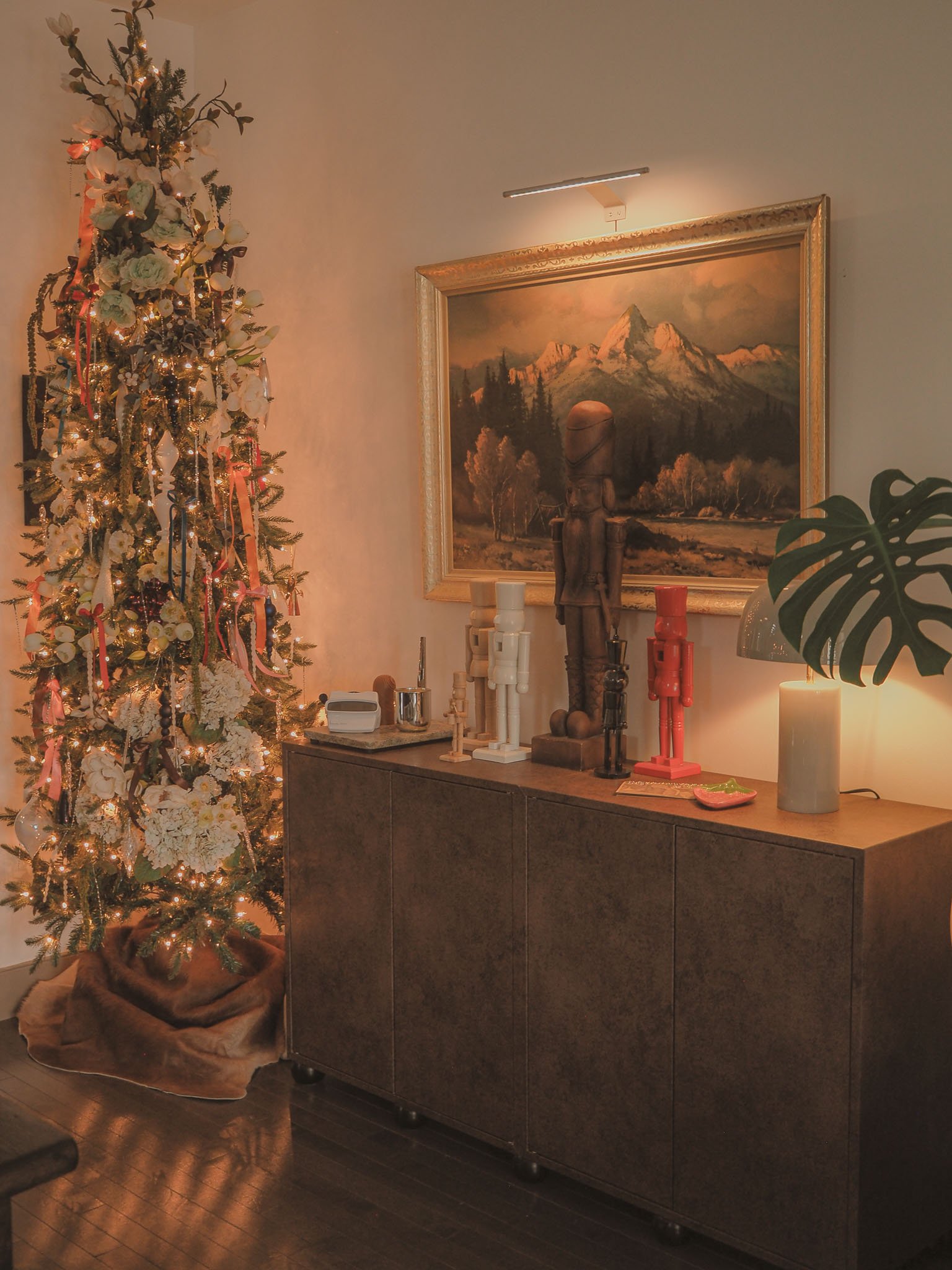
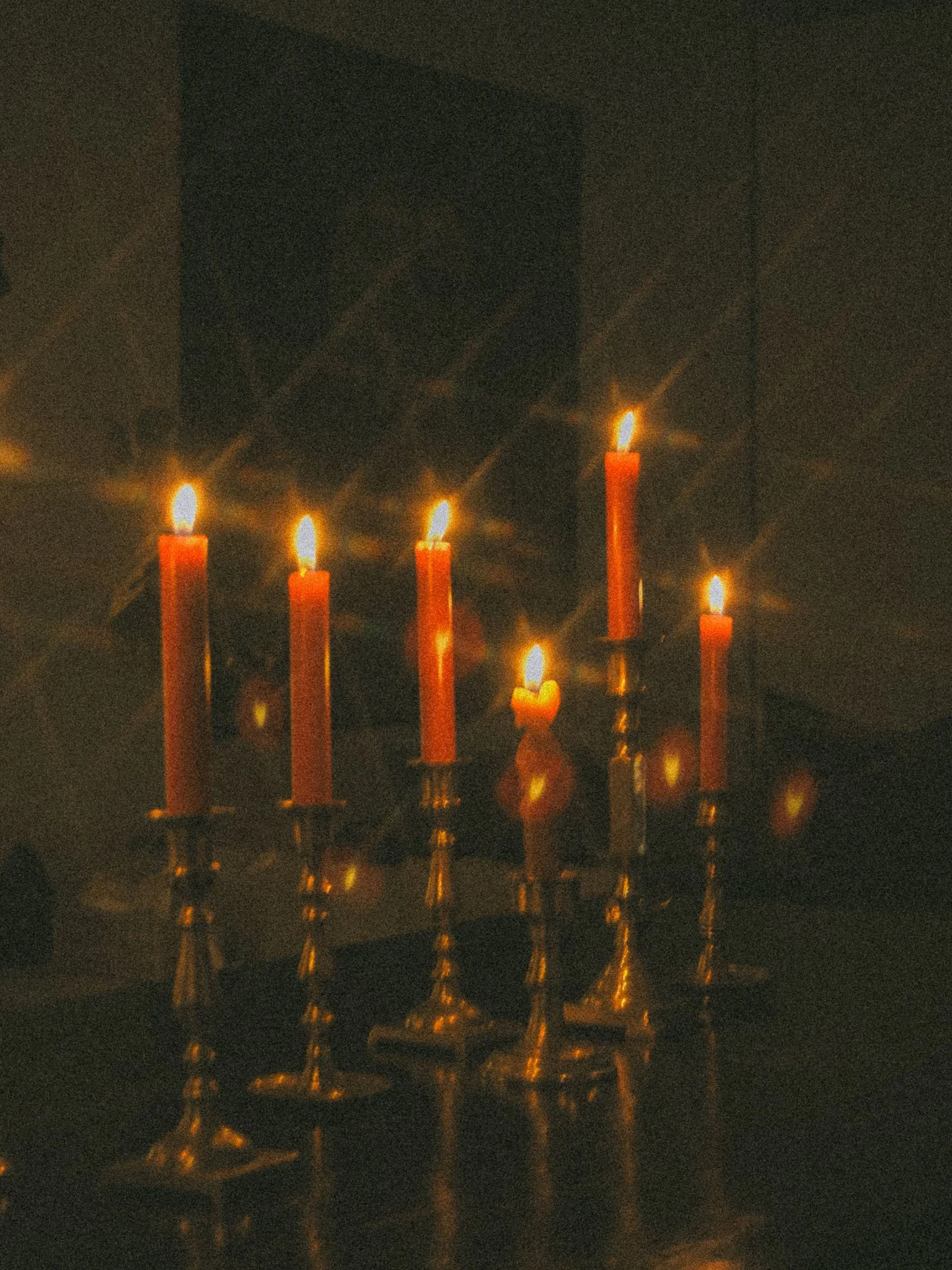
J: I have heirloom ornaments that were always perfectly placed on my grandparents’ tree. Most of them make it onto ours every year. Doing something fabulous always reminds me of my grandmothers, so it fits perfectly. We also have a collection of vintage German glass ornaments that usually arrive for the encore, and a massive carved nutcracker that was one of the first pieces I ever collected. I’m still not ready to admit that it’s (I’m) old enough for it to be considered vintage.
Q. This year’s colour palette was bold. How did you land on it, and what mood were you chasing?
I: The tree was collaborative, but Joel kept pushing for more colour, which is very unlike him. He suggested satin and velvet bows, and I trusted his vision. I was excited to see what he was seeing.
J: He’s not wrong. I’m not a maximalist, but this season felt like the right moment to let my inner chaos shine. We were hosting a big family gathering, and I wanted everyone who walked through the door to immediately feel the magic. No confusion. This was the place to be.
Q. How do you keep holiday decor feeling fresh year after year without constantly buying new things?
I: New doesn’t always mean fresh. Fresh means trusting your instincts and presenting your classic style in new ways. Add one or two pieces each year, but build on what already feels like you. This year, I wrapped garland along the stair stringer and swagged a navy beaded garland beneath it. We also moved the tree, which opened up an entirely new aesthetic.
J: Moving the tree changed everything. We treat decorating like it’s our first time every year. We ask ourselves where the tree could go and how do we make the entire house feel intentional. That’s how nothing ever feels repetitive.
Host Like You’ve Done This Before
Q. You hosted a big gathering this year. What does hosting mean to you?
I: I love hosting. I love making things a moment. I’m extra like that. I look at the guest list and think about what people will enjoy, from music to food to timing. It’s not just design, it’s atmosphere.
J: For me, it’s about the experience. What will people remember? What photos will they take? Just like in design, those answers create your focal point. The added bonus is being with people we love.
Q. What’s the number one thing you do to make guests feel instantly comfortable?
I: Don’t forget the entryway. The party starts and ends at the door. This is a tip more so centred around building the environment, however the host in me says to make sure you have a dedicated space for coats when you greet everyone, and be ready to dole out beverages to welcome guests.
J: I think it’s important that the host provides the first drink to every guest. This is an opportunity to chat with everyone, say hello, and have a quick conversation. It helps to give everyone the lay of the land: where they can find food, where’s the washroom, and if there is any important information to share.
Q. Why are zones and vignettes so important when hosting?
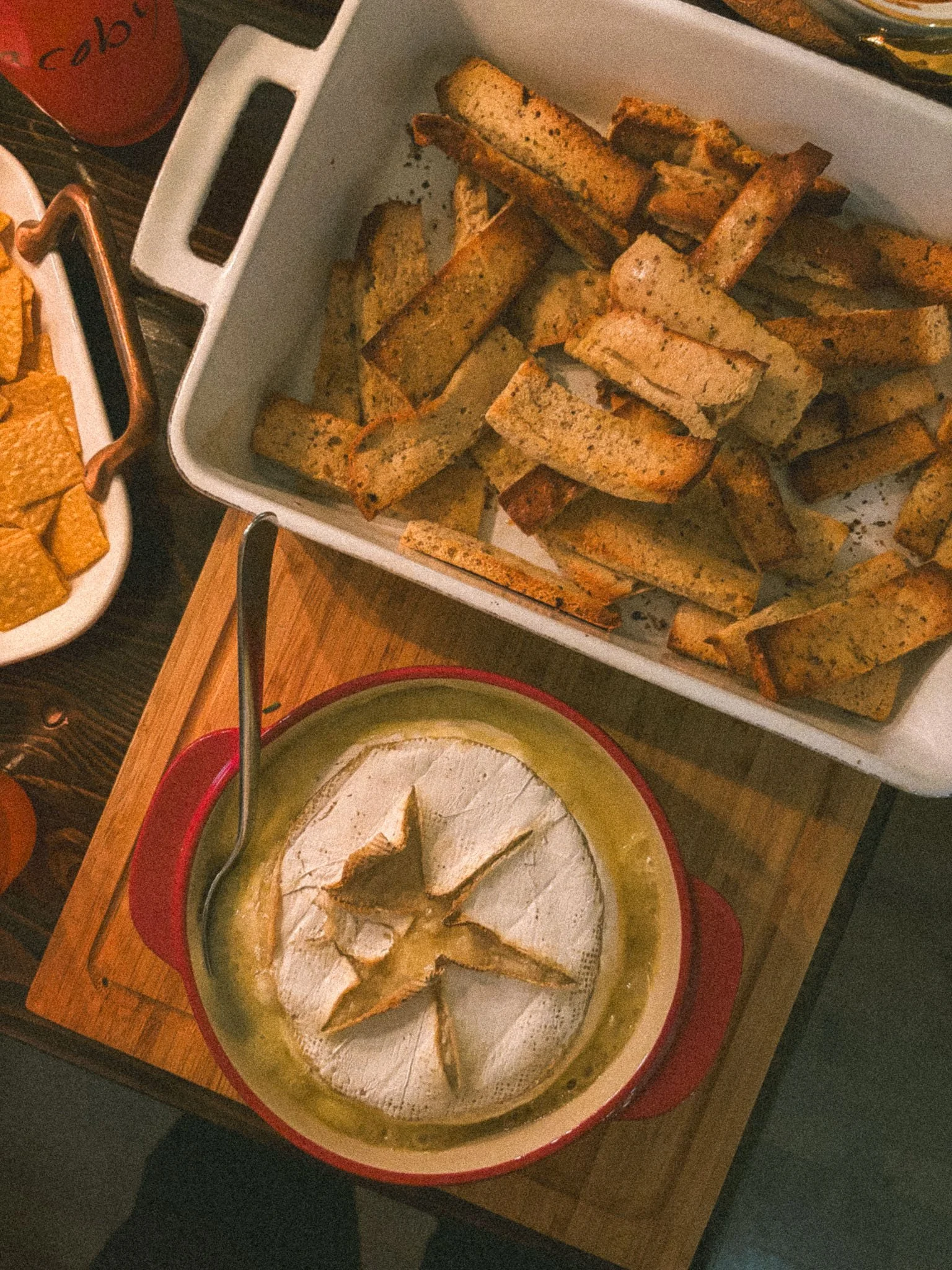
I: As someone who loves blending different groups of friends, the same way I enjoy blending design, I’ve always felt it’s important to create moments that pull people through the home. Vignettes draw guests into different spaces and gives them permission to explore. This year, we set desserts in the dining room, snacks in the living room, and mains in the kitchen. It naturally mapped out the evening. Guests arrived and gathered around snacks, moved into deeper conversations over mains, and ended the night laughing over desserts in a completely different vignette. It creates rhythm, flow, and ease, without anyone feeling directed.
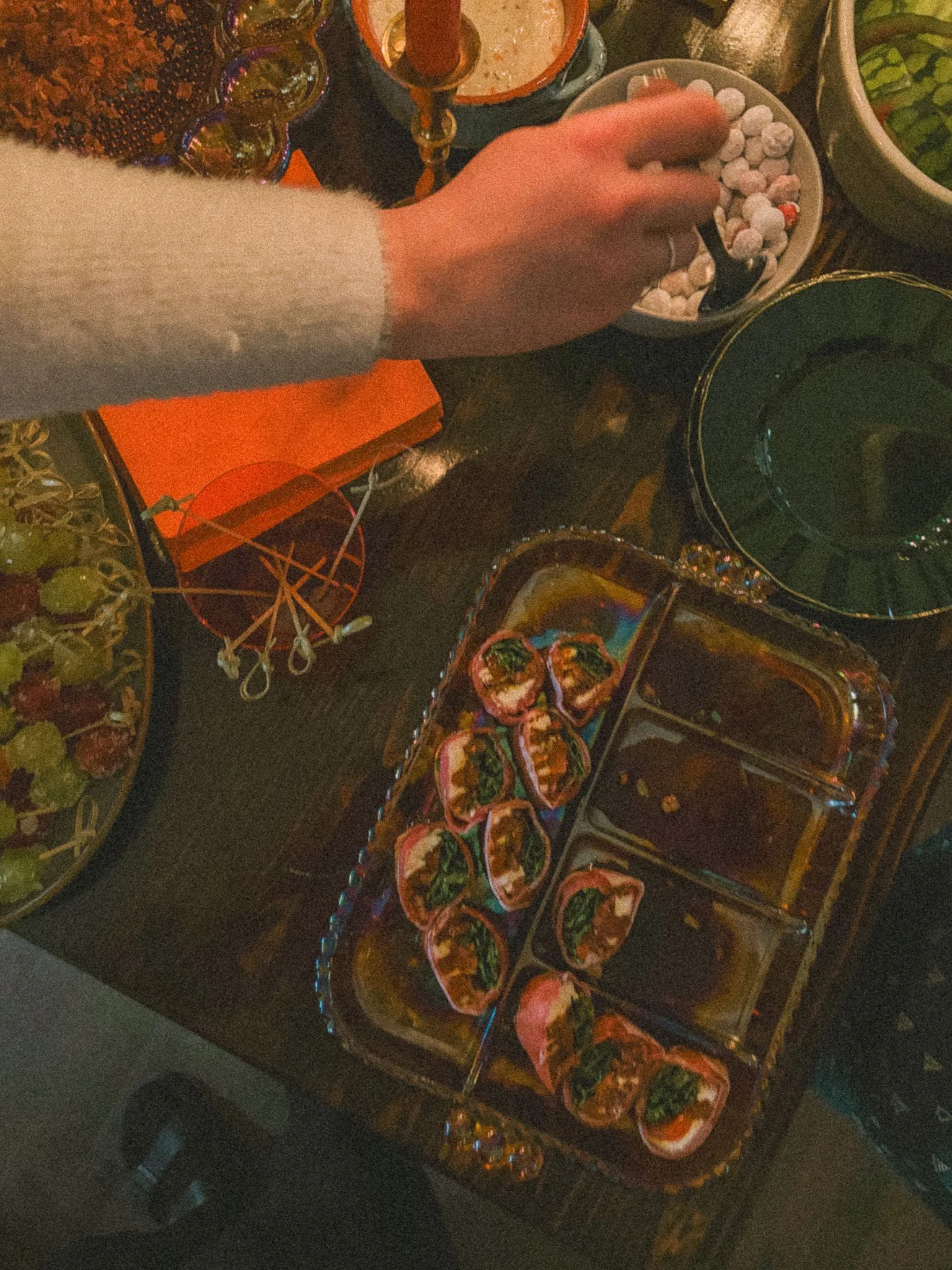
a power-move Potato
Q. Be honest. Whose idea was the baked potato bar, and when did you know it was happening?
I: I suggested it with a twist, and then we built on the idea together. We landed on three versions: a Christmas dinner potato with stuffing, gravy, and orange port cranberry sauce, a classic baked potato with cream, onion, and bacon, and a buffalo chicken potato. The idea came from a trip to Athens years ago. We stumbled upon a baked potato stand with endless toppings, and it stuck with us. We still talk about that meal, so it felt special to bring that memory into our own home and share it with friends.
J: Not to mention, it was easy. Which matters. Special shoutout to everyone who helped out. The dinner itself was a potluck, which is the smartest way to feed a crowd. Guests brought appetizers, and we built the rest around that. Also, special thanks to my mom, who makes the best stuffing.
Q. Why do you love serving unexpected food at gatherings?
I: Food is memory. People remember what they ate, what they wore, and what music was playing. Those details anchor experiences. Serving something unexpected creates a shared moment. It gives people something to talk about, laugh about, and remember later. For me, food is just as important as lighting or music when building an environment.
Gifting out of the Box
Q. When you’re choosing gifts, what matters more: usefulness, beauty, or meaning?
I: Meaning always comes first for me. I want someone to feel seen. I want them to know I paid attention to what kind of year they had, what they were focused on, and what they care about. That said, if it’s a lighthearted exchange, I lean into obscure but practical. That’s where the fun is.
Q. Why do you love gifting original artwork?
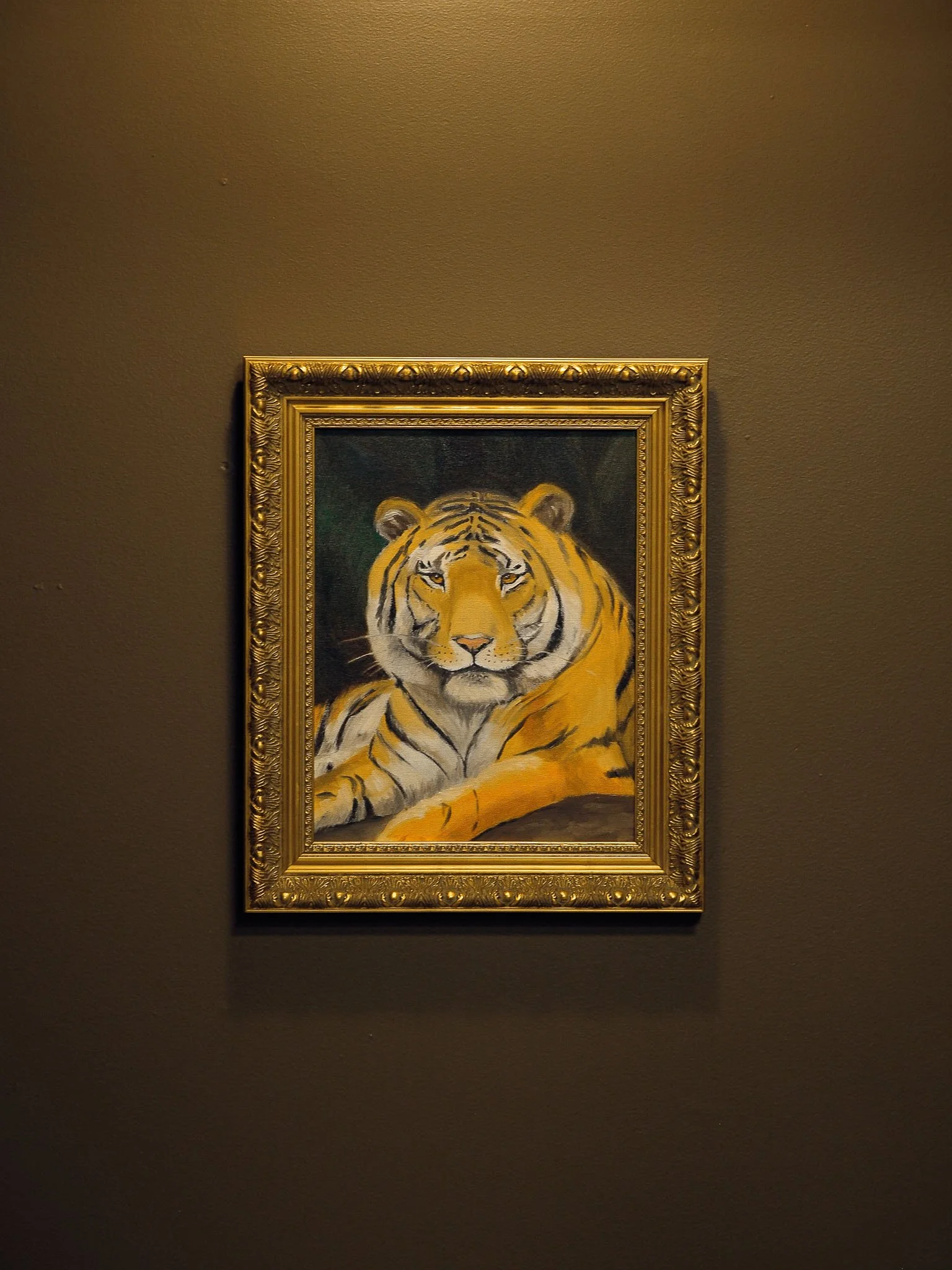
J: Because it’s one of a kind. Gifting original artwork shows that you truly know someone, their style, their home, and their taste. Art is heirloom. It’s generational. When you gift original art, you’re supporting an artist and giving the recipient something that can live far beyond the moment.
Q. Home decor can be risky as a gift. How do you know when it’s the right move?
I: Books are always a safe bet. Design books, coffee table books. Easy to style, easy to tuck away. If you’re feeling bolder, stick to classic and functional pieces like vases, serveware, decanters, or glassware. Scale matters. Bigger doesn’t mean better.
Q. What’s something you own that brings you disproportionate joy?
I: I have a vintage handmade camel stool from Pakistan from the 1940s. We had a new cushion made for it, and it brings me so much joy. It’s campy, culturally relevant to me, and adds that South Asian flair I want in my personal space. It’s out year-round, and it makes me happy every time I see it.
J: Artwork, always. We recently moved an etching so I could look at it more often. It’s of a cathedral ceiling fresco, hundreds of years old. It feels important. That, or the red t*t.
Q. How do you tailor gifts for minimalists versus maximalists?
I: A gift isn’t about giving more or less. What’s more important is capturing someone’s style and essence in what you’re giving. A maximalist and a minimalist can like the same things but will use the gift in the way that best suits them.
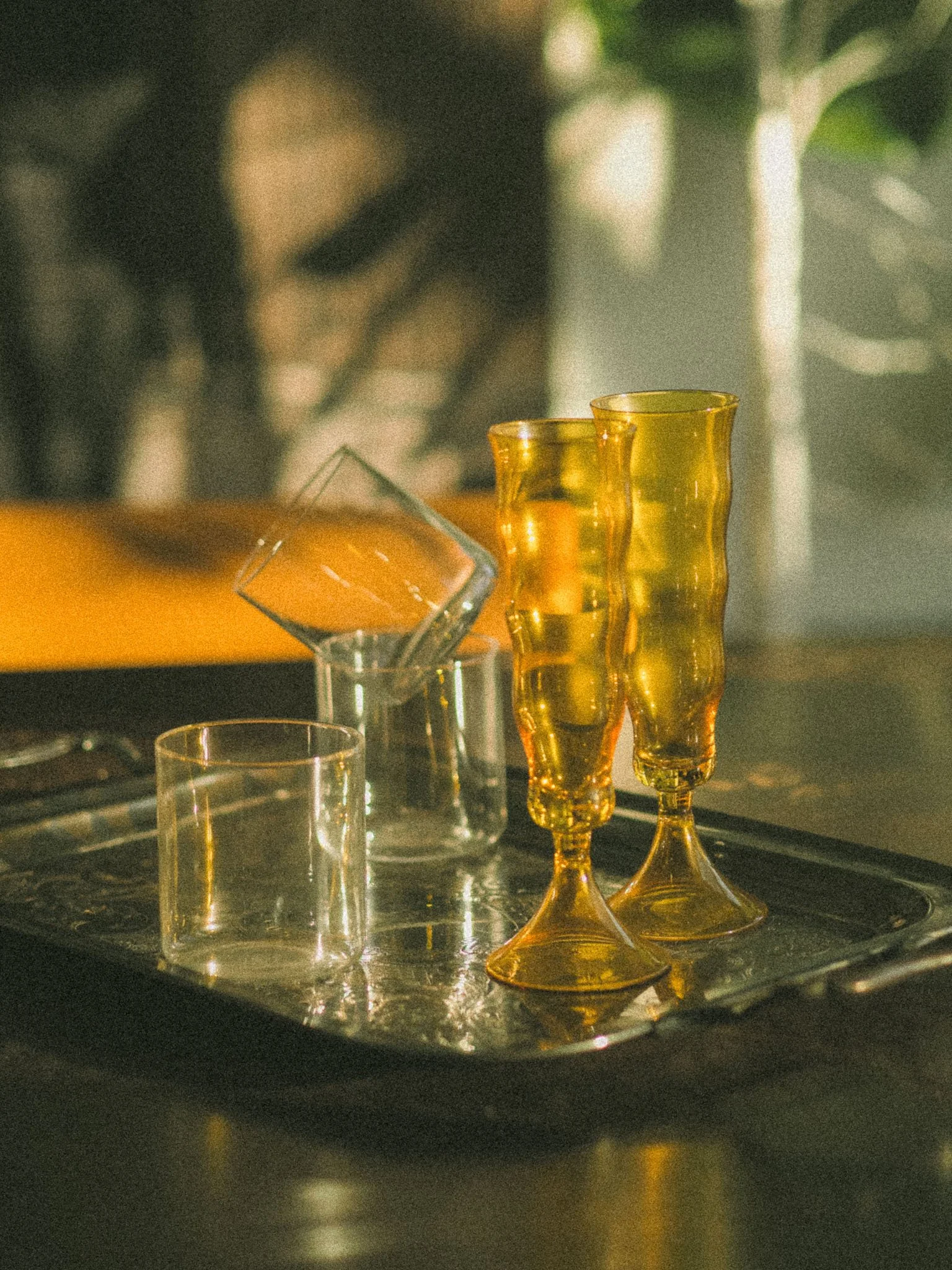
J: This can also come through the object itself. With barware, for example, I might gift something louder and more unexpected, like yellow champagne flutes with an unconventional shape. For a minimalist, my challenge is finding the most pared-back option. We have these almost-too-thin rocks glasses that are the perfect example.
Q. Looking back, what made this holiday season feel successful to you?
J: As much as we embraced chaos, I also felt more present than I have in previous years. That’s my biggest success.
Q. What would you tell someone who wants their home to feel more magical this time of year, but doesn’t know where to start?
I: Start small with what inspires you and allow the process to flow. Trust your instincts. That’s the most authentic version of you. Always edit at the end. Editing at the end leaves room to build balance.
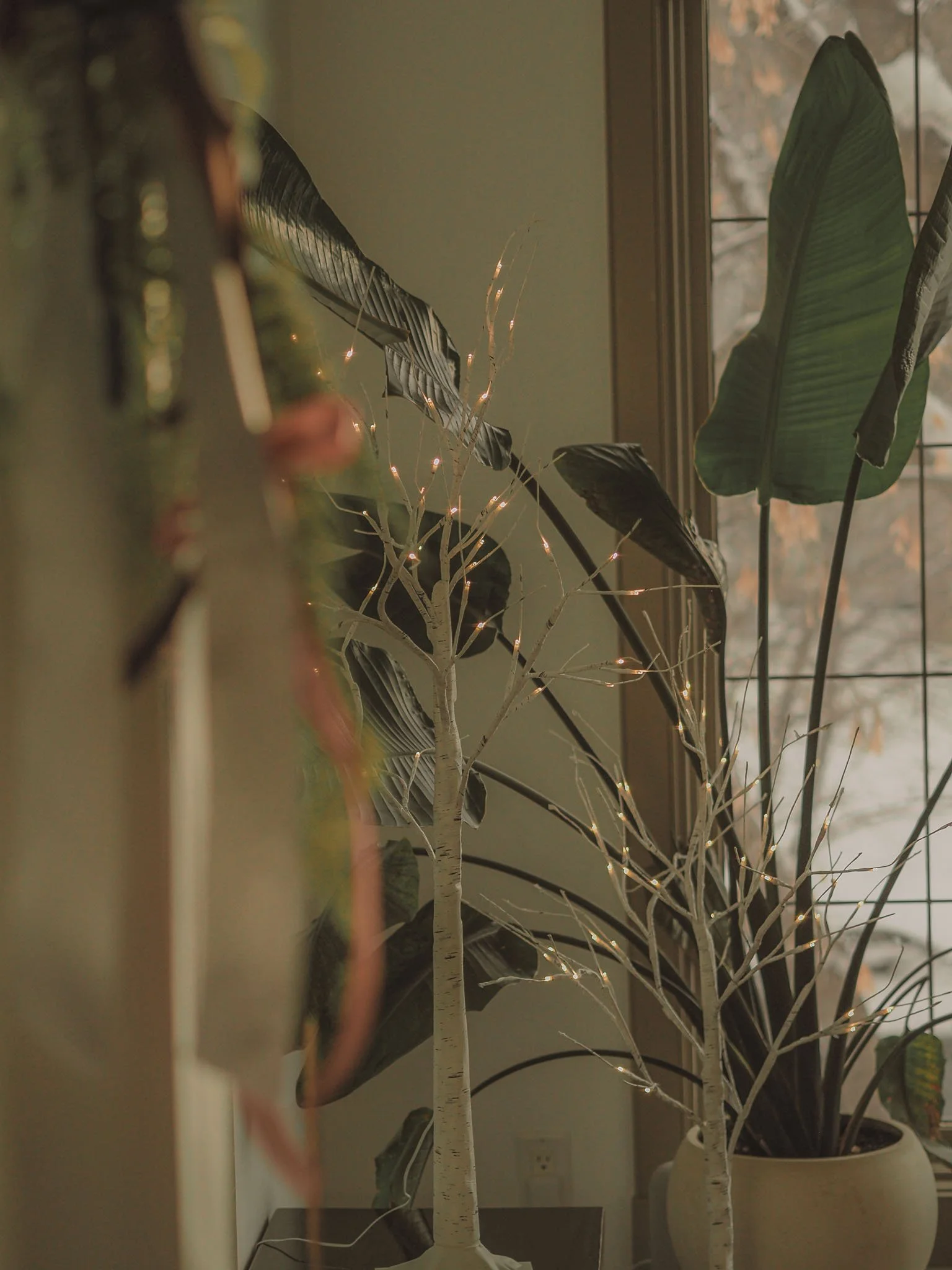
J: Lighting. Lighting. Lighting.
Q. If there’s one thing you hope people take away from how you decorate and host, what is it?
I: Trust your instincts. Have fun. Design is meant to be fun, whether that’s the environment, the menu, the drinks, the activities, or the gifts.
J: Biggest takeaway? Nothing is really that big of a deal. Your house isn’t perfect? Not that big of a deal. Did every crumb get eaten? Not that big of a deal. My biggest piece of advice is to chill, and I probably give that advice to myself more than anyone else. If it makes you happy, do it.